1 min read
You pay tax on profit, not on what comes in
Money in minus allowable costs equals profit. Profit is the number your tax is worked out from.
In short
Three words get mixed up all the time. Income (or turnover) is everything customers pay you. Expenses are the costs of running the business. Profit is what's left: income minus allowable expenses. Income Tax and National Insurance are worked out on profit.
How it works
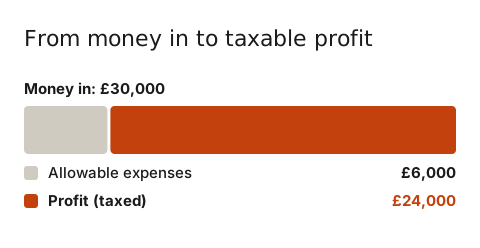
Every pound of genuine business cost you record lowers your profit, and so lowers your tax. That's why knowing what counts as an allowable expense matters so much.
Profit isn't the same as cash in the bank, though. You might have been paid in advance, or bought equipment that's spread over time for tax. Your bank balance and your taxable profit can be quite different. See Cash basis or traditional accounting?
A few things work on income, not profit. The trading allowance, the VAT registration threshold and Making Tax Digital all look at money coming in before costs.
An example
Using made-up figures: Ollie, a photographer, invoices £30,000 in a year. He spends £6,000 on equipment, software, travel and insurance. His profit is £24,000. That £24,000 is the figure his tax is based on, not £30,000.
Common mistakes
- Panicking that tax will be charged on everything you invoice.
- Forgetting to record small costs. They add up across a year.
- Spending the whole of your profit. Some of it belongs to HMRC. See the tax pot habit.
Your next step: work out last month's profit: money in minus business costs. Doing it monthly takes minutes and makes the year-end easy.