1 min read
The Self Assessment calendar: five dates to know
Five dates run the self-employed year. Learn them once and you'll never be surprised by a penalty.
In short
Self Assessment runs on a small set of dates that rarely change. Put them in your calendar once and repeat them every year.
How it works
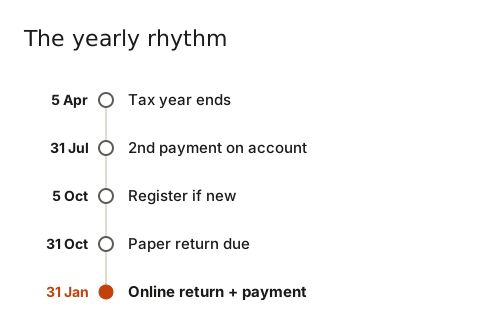
- 5 April: the tax year ends. From the next day, you can file the return for the year just gone.
- 31 July: the second payment on account is due, if you make them.
- 5 October: the deadline to register if you started self-employment or renting in the tax year just ended.
- 31 October: the deadline for paper returns. Most people file online, which gives you longer.
- 31 January: the deadline to file online and to pay the rest of last year's tax. It's often also when your first payment on account for the current year is due.
Filing and paying are separate. You can file early and still pay on 31 January. Filing early tells you what you owe, and gives you months to prepare.
An example
Chloe files her return in June. She learns she'll owe a bill in January and a payment on account on top. She now has seven months to save for it rather than seven days.
Common mistakes
- Treating 31 January as a filing date only. It's a payment date too.
- Missing the July payment because it isn't linked to a return.
- Assuming no tax owed means no penalty. Late filing can bring a penalty even if you owe nothing. See How to put it right.
Your next step: set yearly reminders for all five dates, plus one in early autumn that just says 'file my return now'.