2 min read
Missed a deadline or made a mistake? How to put it right
Penalties grow the longer you leave things, and coming forward yourself almost always costs less. Here's how to fix common problems.
In short
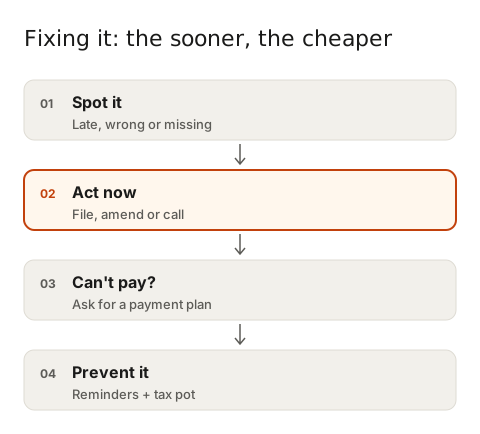
Everyone gets something wrong eventually. HMRC treats people who come forward and fix things far more kindly than people it has to chase. Act early: file late rather than never, amend rather than ignore, and ask for a payment plan rather than miss payments.
How it works
- Missed the filing deadline: file as soon as you can. There's usually a fixed penalty even if you owe no tax, and it grows the longer it's late. The penalty system has been updated before and may change again, so check GOV.UK.
- Can't pay in full: contact HMRC before the deadline if possible. You can often set up a payment plan (Time to Pay) online if you meet the conditions. Interest still applies, but it's better than penalties for not paying.
- Made a mistake on a return: you can normally amend it online within a set period after the filing deadline. Outside that period, contact HMRC.
- Never registered when you should have: tell HMRC voluntarily through the disclosure service. Penalties are usually lower for unprompted disclosures.
- Had a good reason: if serious illness, a bereavement or a system failure stopped you, you can appeal a penalty with a reasonable excuse.
Getting help
GOV.UK and the HMRC app cover most questions for free. An accountant or tax adviser can help with complex situations. Check they're a member of a professional body. Charities like TaxAid and Tax Help for Older People offer free help if you're on a low income. And remember: HMRC won't contact you about refunds by text or email asking for bank details. Treat those as scams.
An example
Rosa missed the January deadline after a family emergency. She files in February, pays what she can and sets up a payment plan for the rest. She appeals the late-filing penalty with a reasonable excuse, and HMRC cancels it.
Common mistakes
- Ignoring HMRC letters. Problems don't disappear, they grow.
- Not filing because you can't pay. Filing and paying are separate, and late filing adds its own penalty.
- Fixing the symptom but not the cause. Set up reminders and a tax pot.
Your next step: if something's been worrying you, deal with it this week. Then go back to the start of the series: What counts as self-employed.