2 min read
Self-employed, sole trader, freelancer: what the words mean
Four labels, one idea: if you work for yourself and keep the profit, the tax rules for the self-employed apply to you.
In short
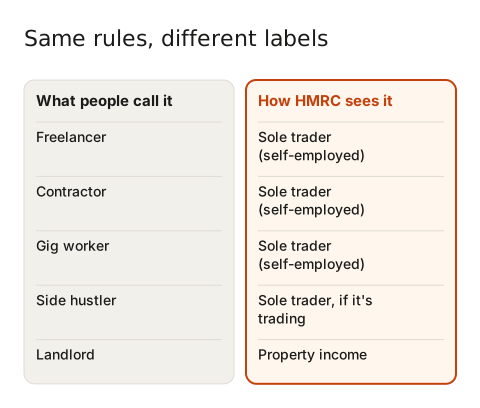
Freelancer, contractor, gig worker, side hustler: these are everyday words, not tax categories. To HMRC, if you work for yourself and keep what's left after costs, you're self-employed, usually as a sole trader. Landlords sit in a neighbouring box called property income. Both are reported the same way: through a yearly Self Assessment tax return.
How it works
A sole trader is simply a person running a business on their own account. There's no company to set up and no separate legal 'thing': you are the business. You keep the profits, you're responsible for any debts, and you pay Income Tax and National Insurance on what you make.
That's different from being an employee, where your employer runs payroll and takes tax off before you're paid. It's also different from running a limited company, which is a separate legal person that pays its own tax. We compare the two in Sole trader or limited company?.
You can be more than one of these at once. Plenty of people have a salaried job, sell handmade cards at weekends and rent out a spare room. Each income stream follows its own rules, and you bring them together on one tax return. See Employed and self-employed at the same time.
An example
Priya designs logos on evenings and weekends and calls herself a freelancer. Jake drives for a delivery app. Sam lets out a flat he used to live in. Priya and Jake are both sole traders in HMRC's eyes. Sam has property income. All three will likely file a Self Assessment return.
Common mistakes
- Thinking a job title like 'contractor' means someone else handles your tax.
- Assuming small or occasional income doesn't count. It might, depending on the activity. See When does a side hustle become a business?
- Believing you need to register a company to start. Most people start as sole traders.
Your next step: write down every way you earn money outside a salary. That list is the starting point for everything else in this series.