1 min read
Setting money aside for tax: the tax pot habit
No employer takes tax off for you, so you have to do it yourself. A fixed percentage, moved every time you're paid, takes the fear out of January.
In short
When you're employed, tax disappears before you see your pay. When you're self-employed, the full amount lands in your account and the bill arrives months later. The fix is simple: every time you're paid, move a set percentage into a separate savings pot and don't touch it.
How it works
- Pick a percentage. Think about which Income Tax band your profit falls in, add National Insurance, and round up. Many people start somewhere between a fifth and a third of profit, then adjust.
- Move it on payday. As soon as a client pays, transfer the percentage. Some business bank accounts can do this automatically.
- Keep it out of sight. An easy-access savings account earns a little interest and is harder to spend by accident.
- Check once a year. After you file, compare the pot to the bill. Too little? Raise the percentage. Too much? You've got a bonus.
Don't forget payments on account. In your second year, January can bring last year's bill plus an advance on this year's. The pot needs to cover both.
An example
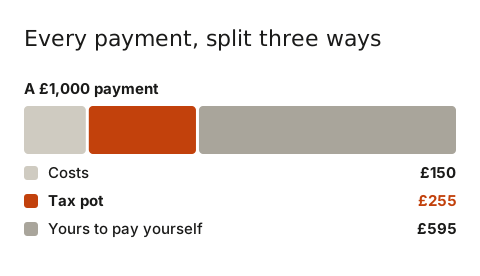
Using made-up figures: Kemi is paid £1,000 for a project. About £150 covers costs for that job. She moves £255 into her tax pot and the rest is hers. In January, the pot holds what she owes and the bill is a non-event.
Common mistakes
- Saving from what's 'left over' at month-end. There's rarely anything left.
- Borrowing from the pot for a quiet month and not paying it back.
- Forgetting that a big year can mean bigger payments on account the year after.
Your next step: open a savings pot labelled 'Tax' and set your starting percentage today. If your bill ever looks unaffordable, see How to put it right.