1 min read
Cash flow: smoothing lumpy income
Self-employed income comes in waves. A buffer and a fixed monthly 'salary' turn feast-and-famine into something you can budget around.
In short
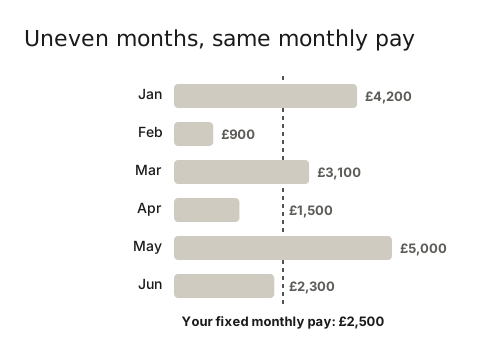
Cash flow is the timing of money in and out. Self-employed income is rarely smooth: a big month, then a quiet one. The fix is to put income into a buffer first, then pay yourself the same amount each month from it.
How it works
- All income goes into your business account.
- Your tax pot share comes out first.
- Work out a monthly 'salary' you can sustain in an average month.
- Pay yourself that amount on the same day each month.
- Anything extra builds the buffer. Aim for a few months of salary plus costs.
Good cash flow also depends on how fast you're paid. Deposits, stage payments and clear payment terms help as much as saving does.
An example
Using made-up figures: Ruth, a wedding florist, earns most of her income from May to September. She pays herself £2,500 a month all year. Summer surpluses fill her buffer, which then covers winter. Her rent never depends on how busy March is.
Common mistakes
- Raising your spending after a great month.
- Treating money in the business account as yours to spend. Some is tax, some is next month's pay.
- Leaving payment terms vague, which stretches every gap.
Your next step: add up the last 12 months of profit, take off tax, and divide by 12. That's a realistic starting monthly 'salary'.