1 min read
Invoicing and getting paid on time
A clear invoice with agreed terms gets paid faster. And if a business client pays late, the law is on your side.
In short
An invoice is a request for payment and a key business record. Make it clear, send it promptly, and agree payment terms before you start the work. If another business pays you late, UK law usually lets you charge interest and a fixed fee for the hassle.
How it works
A sole trader's invoice should include:
- A unique invoice number, in sequence.
- Your name (and any trading name), address and contact details.
- Your customer's name and address.
- The date of the invoice and the date the work was done.
- A clear description of what you're charging for.
- The amount due, the payment terms and your bank details.
- If you're VAT-registered: your VAT number and the VAT breakdown.
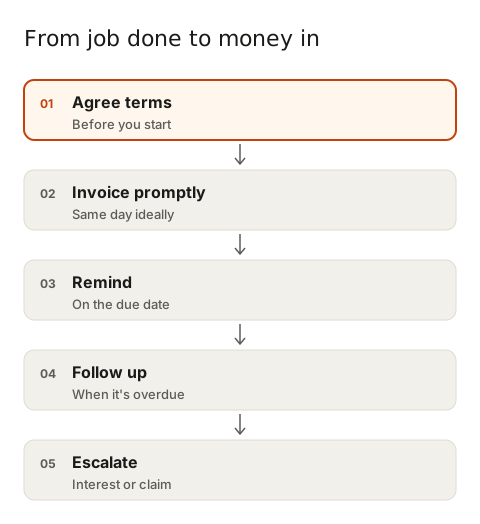
If a business customer pays late and you haven't agreed other terms, you can usually claim statutory interest and fixed compensation under late payment law. You don't have to use it, but mentioning it often gets a reply. This doesn't apply to private individuals.
An example
Ella, a translator, used to invoice whenever she remembered. Now she agrees 14-day terms by email before every job, invoices the day she delivers, and sends a friendly reminder on day 14. Her average wait has dropped from six weeks to under three.
Common mistakes
- Starting work without agreeing the price and when you'll be paid.
- Waiting until month-end to invoice.
- Taking all the risk on large jobs. Ask for a deposit or stage payments. It also smooths your cash flow.
Your next step: make an invoice template with all the fields above, plus your standard payment terms. Write a polite reminder email you can reuse.