1 min read
VAT basics: when you need to register
VAT registration depends on turnover, not profit. Watch a rolling 12-month total, and know that you can register voluntarily if it helps.
In short
VAT is a tax on sales that VAT-registered businesses add to their prices and pass on to HMRC. You must register once your VAT-taxable turnover goes over the registration threshold in any rolling 12-month period, or if you expect it to within the next 30 days. You can register voluntarily below it.
How it works
The threshold is based on sales, not [profit](/articles/profit-not-income). A business with high turnover and thin margins can need to register even if it makes very little. The threshold is set by government and can change, so check GOV.UK for the current figure.
It's a rolling 12 months, not your tax year. At the end of each month, add up the last 12 months of taxable sales. Some sales are exempt and don't count, while zero-rated sales do. The type of sale matters.
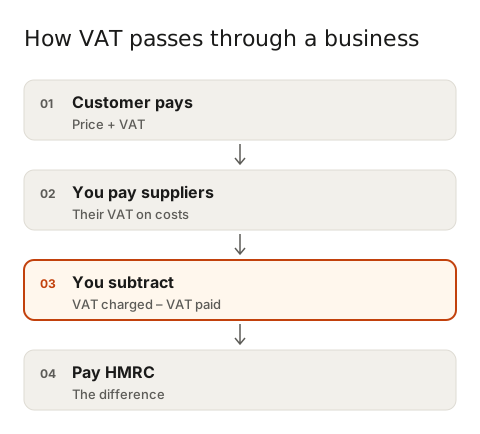
Once registered, you charge VAT on your sales and can usually reclaim VAT on your business costs. You then file regular VAT returns using compatible software. VAT already falls under Making Tax Digital. There are also VAT schemes that can make it simpler.
An example
Tariq runs an online shop selling phone cases. His profit is modest, but his rolling sales total creeps towards the threshold. He sets a monthly reminder to check the total, so he registers on time rather than discovering it late and owing VAT he never charged.
Common mistakes
- Checking only once a year instead of monthly on a rolling basis.
- Using profit instead of turnover.
- Registering late, then owing VAT on sales where you didn't charge it.
- Assuming voluntary registration is always bad. If your customers are VAT-registered businesses, it may cost them nothing and let you reclaim VAT on costs.
Your next step: add a 'last 12 months of sales' total to your records and check it monthly. If you're getting close, read VAT schemes in plain English.