1 min read
Making Tax Digital: what it means for you
Making Tax Digital moves tax records into software and swaps one yearly return for regular updates. It's being phased in, starting with higher earners.
In short
Making Tax Digital (MTD) is HMRC's move to digital tax records. It already applies to VAT. For Income Tax, it's being phased in for sole traders and landlords, starting with those whose self-employment and property income (before costs) is above a set level, and gradually including more people. If it applies to you, you'll keep records in compatible software and send short quarterly updates, then a final year-end submission.
How it works
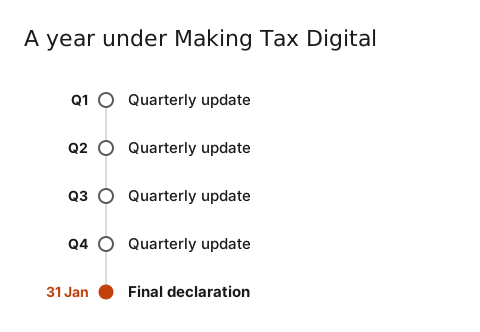
- Digital records: you record income and expenses in MTD-compatible software, or a spreadsheet linked to it.
- Quarterly updates: summaries of income and expenses sent to HMRC through that software. They don't change when you pay tax.
- Final declaration: after the year ends, you add anything else (other income, allowances, adjustments) and confirm the figures by 31 January.
- Who's in: it depends on your qualifying income, based on gross income, not profit. The thresholds and timetable have changed before and may again, so check GOV.UK.
If you already keep weekly records in an app, MTD is a small step. If you rely on a shoebox in January, it's a bigger change. Start now rather than when you're required to.
An example
Sophie, a hairdresser with a rented-out flat, gets a letter saying MTD will apply to her. She already uses a bookkeeping app, so she checks it's on HMRC's compatible list and turns on quarterly submissions. Each quarter takes about ten minutes.
Common mistakes
- Assuming quarterly updates mean quarterly tax payments. They don't.
- Testing against profit rather than gross income.
- Choosing software that isn't on HMRC's compatible list.
Your next step: add up last year's gross self-employment and property income and check it against the current MTD timetable on GOV.UK.