1 min read
Keeping records: what to keep and for how long
Good records make tax returns quick and protect you if HMRC asks questions. Keep them for at least five years after the filing deadline.
In short
Records are the evidence behind your tax return: what came in, what went out, and proof of both. Keep them for at least five years after the 31 January filing deadline for that tax year. Digital copies are fine.
How it works
What to keep:
- Sales and income: invoices, receipts, platform payout reports.
- Costs: receipts and bills for everything you claim as an expense.
- Bank statements, ideally from a separate business account.
- Mileage logs and working-from-home records if you use simplified expenses.
- For landlords: tenancy agreements, rent received, repair bills.
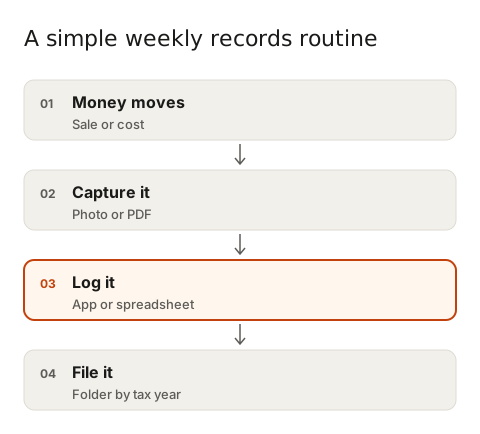
You don't need special software for basic records: a spreadsheet works. But Making Tax Digital is moving more people towards keeping records in compatible software, so it's worth picking a tool that can grow with you.
An example
Every Friday, Ben photographs that week's receipts with a bookkeeping app and ticks off each bank transaction. At the end of the tax year, his totals are already done. His return takes an evening, and if HMRC ever asks about a claim, the receipt is a search away.
Common mistakes
- Keeping receipts in a shoebox. Thermal paper fades, so photograph them.
- Deleting records after a couple of years. HMRC can look back further.
- Relying on memory for mileage. Log trips as you make them.
Your next step: create one folder per tax year (for example '2026-27') and pick a fixed weekly slot to update it.