1 min read
Why a separate account makes everything easier
Sole traders don't legally need a business bank account. But keeping business money apart saves time, mistakes and stress.
In short
As a sole trader, you and your business are legally the same, so a dedicated business account isn't required by law. Some banks require one for business use, though. Either way, a separate account for business money is one of the simplest habits that saves the most hassle.
How it works
When every business payment in and out runs through one account, your bank statement becomes most of your records. You're not picking through supermarket shops and family transfers to find a client payment.
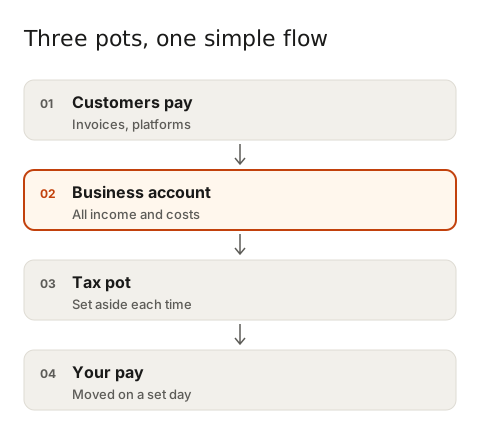
Pair it with a savings pot for tax. Each time you're paid, move a share into it. See the tax pot habit. Then pay yourself a regular amount into your personal account, which helps smooth lumpy income.
Options include a free personal account used only for business, a business account from a high-street bank, or an app-based business account. Compare fees, how they handle cash, and whether they connect to your bookkeeping software.
An example
Grace runs a cake business and a family budget from the same account. Every January she spends two days sorting transactions. She opens a second account just for cakes. The next year, her bookkeeping app imports it automatically and she's done in an afternoon.
Common mistakes
- Paying business costs from your personal card 'just this once', repeatedly.
- Using the business balance as a guide to what you can spend. Some belongs to HMRC.
- Choosing an account without checking fees for the way you're paid.
Your next step: open a separate account (or repurpose an unused one) and redirect all business income to it from your next invoice.