1 min read
Pricing your work: what an hour really costs
Your rate has to cover tax, costs, holidays, admin and quiet weeks, not just the hours you bill. That's why freelance rates look higher than salaries.
In short
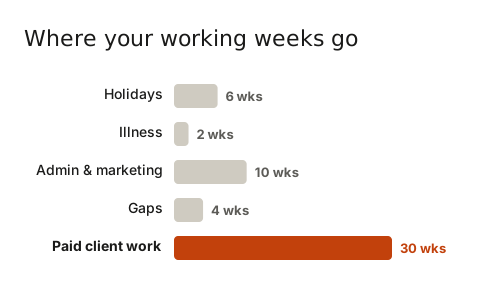
A common mistake is to take a salary, divide it by working hours, and charge that. But as a self-employed person, you pay for your own holidays, sick days, pension, equipment, admin time and quiet spells. Your rate has to cover all of it from the hours you can actually bill.
How it works
- Start with what you need to take home for a year.
- Add tax and National Insurance. Gross it up using your tax band.
- Add business costs: software, insurance, equipment, travel, accountant.
- Add a pension contribution. Nobody else is paying one. See Pensions for the self-employed.
- Divide by your realistic billable time, not 52 weeks of 40 hours.
The result is usually much higher than people expect. That's not greed. It's the true cost of running a business with one employee: you.
An example
Using made-up figures: Jordan wants to take home £30,000. After tax, NI, a pension and £4,000 of costs, he needs to bring in about £45,000. With around 30 billable weeks of 25 hours, that's 750 hours, or roughly £60 an hour. He'd been charging £25.
Common mistakes
- Pricing from a salary rate.
- Never reviewing your rate. Raise it at least yearly, and give clients notice.
- Charging by the hour when a fixed project price would reward your speed.
Your next step: count last year's truly billable hours. Divide your total profit by that number. That's what you actually earned per hour.