1 min read
Pensions for the self-employed
No employer is paying into a pension for you, but the government still is, through tax relief. Small, regular contributions add up over decades.
In short
When you work for yourself, there's no workplace pension and no employer contribution. But you still get tax relief: money you pay into a personal pension is topped up by the government. The State Pension is built separately through National Insurance.
How it works
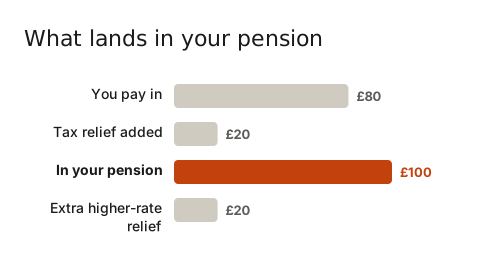
With most personal pensions, you pay in from your take-home money. The provider claims basic-rate tax relief and adds it to your pot. If you pay tax at a higher rate, you can claim the extra through your Self Assessment return. That effectively moves some income out of your top tax band.
There are limits. Tax relief is normally restricted to your relevant earnings for the year, and there's an annual allowance for total contributions. Both are set by government and can change.
Common options include a personal pension or SIPP (self-invested personal pension), and some providers built for the self-employed let you pay in irregular amounts. Some people also use a Lifetime ISA, which has its own rules and government bonus. If you run a limited company, the company can pay in directly.
An example
Using illustrative figures: Callum pays £80 into his personal pension after each big job. The provider adds £20 of tax relief, so £100 is invested. As a higher-rate taxpayer, he claims a further £20 back through his tax return.
Common mistakes
- Waiting until you 'earn enough'. Time invested matters more than amount.
- Forgetting to claim higher-rate relief on your return.
- Not building pension into your prices. You're your own employer.
- Ignoring the State Pension. Check your NI record for gaps.
Your next step: pick a small percentage of each payment to go into a pension, even 5%, and set it up alongside your tax pot. For free, impartial help, try MoneyHelper's Pension Wise service if you're over 50.