1 min read
Insurance: protecting yourself and your income
No sick pay, no employer cover. A few types of insurance protect you from the risks that could end a small business overnight.
In short
Self-employed people don't get company sick pay, and as a sole trader you're personally responsible if something goes wrong. Insurance turns big, unpredictable risks into a small, predictable cost. Which policies you need depends on your work.
How it works
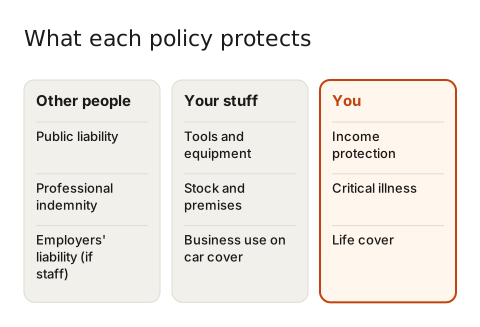
- Public liability: covers injury or damage to members of the public or their property, such as a customer tripping over your equipment. Essential for trades and anyone working in other people's spaces.
- Professional indemnity: covers claims that your advice or work caused a client to lose money. Common for consultants, designers and accountants, and often required by clients.
- Employers' liability: usually a legal requirement as soon as you employ someone.
- Equipment and contents: home insurance often excludes business kit, so check.
- Vehicle: if you drive for work, your car insurance must include business use.
- Income protection: pays a share of your income if illness or injury stops you working. For many people, this is the most important one.
Insurance is an allowable business expense where it covers business risks. Personal policies like income protection usually aren't, but the payouts may be tax-free.
An example
Liam, a self-employed plasterer, breaks his wrist and can't work for three months. His income protection policy pays a monthly amount after a waiting period. Combined with his cash buffer, he pays his bills without debt.
Common mistakes
- Assuming home insurance covers business equipment.
- Driving to client sites without business use on your car insurance.
- Buying cover you don't need while skipping the one that would matter most.
- Not factoring premiums into your rates.
Your next step: write down the single event that would hurt your business most. Then check whether you're covered for it.