1 min read
Selling online: what platforms tell HMRC
Online marketplaces and apps share some sellers' details with HMRC. That doesn't create new tax, but it makes undeclared trading easier to spot.
In short
Online marketplaces, rental and gig apps now report information about some sellers to HMRC, under international rules. This isn't a new tax. If you're just clearing out your wardrobe, you still usually owe nothing. But if you're trading, HMRC can now see it more easily.
How it works
Platforms collect details such as your name, address, tax reference and what you earned through them. Above certain activity levels, they send that to HMRC each year. HMRC can compare it with what people declare.
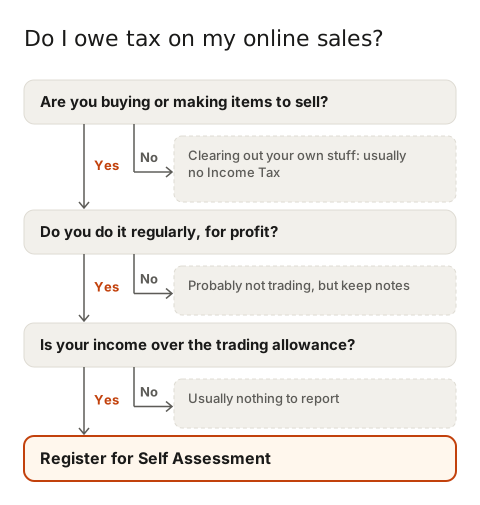
What counts as taxable hasn't changed:
- Selling your own used things, usually for less than you paid: not trading, so usually no Income Tax.
- Buying to resell, or making things to sell, regularly, for profit: likely trading. Over the trading allowance, you need to register.
- Selling valuable personal items like art, jewellery or collectables at a gain can sometimes mean Capital Gains Tax.
- Renting out a room, driveway or holiday let through an app is property income, not trading.
An example
Joe sells lots of old games and clothes after moving house. The platform reports him because he made many sales. But he was selling personal belongings at a loss, so he owes nothing. Meanwhile Yasmin crochets and sells toys weekly. She's trading, and as her income is above the trading allowance, she registers for Self Assessment.
Common mistakes
- Panicking when a platform asks for your tax details. It's routine.
- Assuming not being reported means not taxable.
- Ignoring a letter from HMRC. If you owe tax from past years, coming forward yourself usually means lower penalties.
Your next step: download your annual sales summary from each platform you use and keep it with your records.