1 min read
Repairs vs improvements: what landlords can claim
Fixing something back to how it was is a repair you can deduct now. Making it better is an improvement, which may help with Capital Gains Tax later instead.
In short
A repair restores something to its previous condition, and its cost is an allowable expense against your rental income. An improvement makes the property better than it was. It's a capital cost: not deductible from rent, but usually deductible from the gain when you sell, which can reduce Capital Gains Tax.
How it works
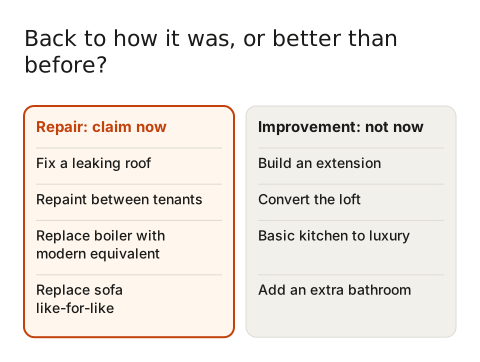
Modern materials don't turn a repair into an improvement. Replacing old single glazing with standard double glazing, or an old boiler with today's equivalent, is generally still a repair. What matters is whether the property's function or value has been significantly increased.
For furnished lets, there's relief for replacing domestic items like furniture, appliances and carpets on a like-for-like basis. Buying them for the first time doesn't qualify.
If one job includes both, split the bill. The repair part is deductible now and the improvement part is kept for later. Keep invoices for improvements for as long as you own the property, plus the usual record period after you sell.
An example
Kate's tenant reports a broken kitchen. She replaces the worn units with similar ones: a repair. Next door, Nick rips out a small kitchen and builds a bigger kitchen-diner: an improvement. Kate deducts her cost from this year's rent. Nick keeps his invoices for when he sells.
Common mistakes
- Treating everything over a certain cost as an improvement. Size doesn't decide it.
- Claiming initial refurbishment before the first let without checking. Work to make a newly bought, unusable property lettable may be capital.
- Throwing away improvement invoices. You'll want them years later when you sell.
Your next step: create two folders for each property, 'Repairs' and 'Improvements', and file each invoice as you pay it.